2025 – 2026 · Solo developer — scraper, valuation model, API and frontend
Car finder
A tool for spotting underpriced used cars, built around the awkward problem of working out what a car is actually worth.
- Engineering
- Product
The brief
Some friends and I talked about starting a business flipping cars. Buy something cheap that needs work, fix it, sell it on. They're mechanics and body-work people, so the fixing side was covered. I can't weld, so what I could contribute was software.
The thing you need before any of that works is a way to tell whether a car listed on Finn.no is genuinely cheap or just looks it. That turned out to be a far more interesting problem than I expected.
The build
The obvious approach is to compare a listing against other cars of the same make, model and year and see whether it sits below average. I built that first, and it was confidently wrong most of the time.
The problem is that "2015 Volkswagen Golf" isn't one thing. In the data I'd collected, a manual Golf averaged around 70,000 kroner and an automatic around 135,000. Diesel sat at 87,000, a plug-in hybrid at 171,000. Private sellers had a median around 124,000 and franchised dealers around 349,000. Comparing a car against that whole pool tells you almost nothing, and it will happily announce that a fairly priced automatic is a bargain because a load of manuals dragged the average down.
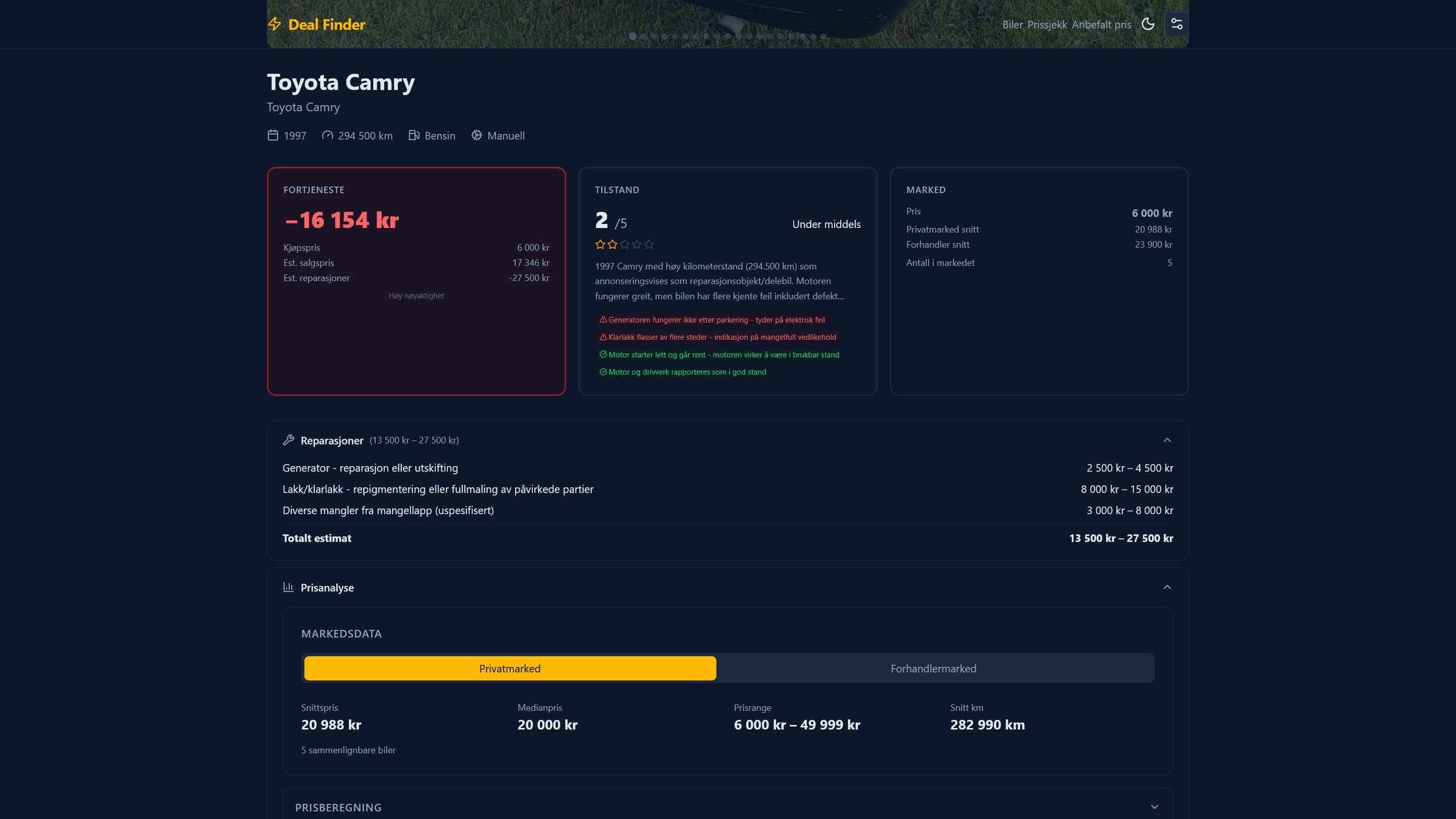
So the matching got stricter. It starts at make, model, year window, fuel type and transmission, and relaxes one filter at a time only until it has at least five comparable cars to work with. It keeps track of how far it had to relax, which is really a confidence score, and then corrects for whatever it gave up: mileage by regression against the pool, fuel and transmission by comparing group averages.
It also splits private sellers from dealers and treats the private market as the real number, because that's the price you could actually sell into. Dealer prices are a ceiling you aren't going to reach.
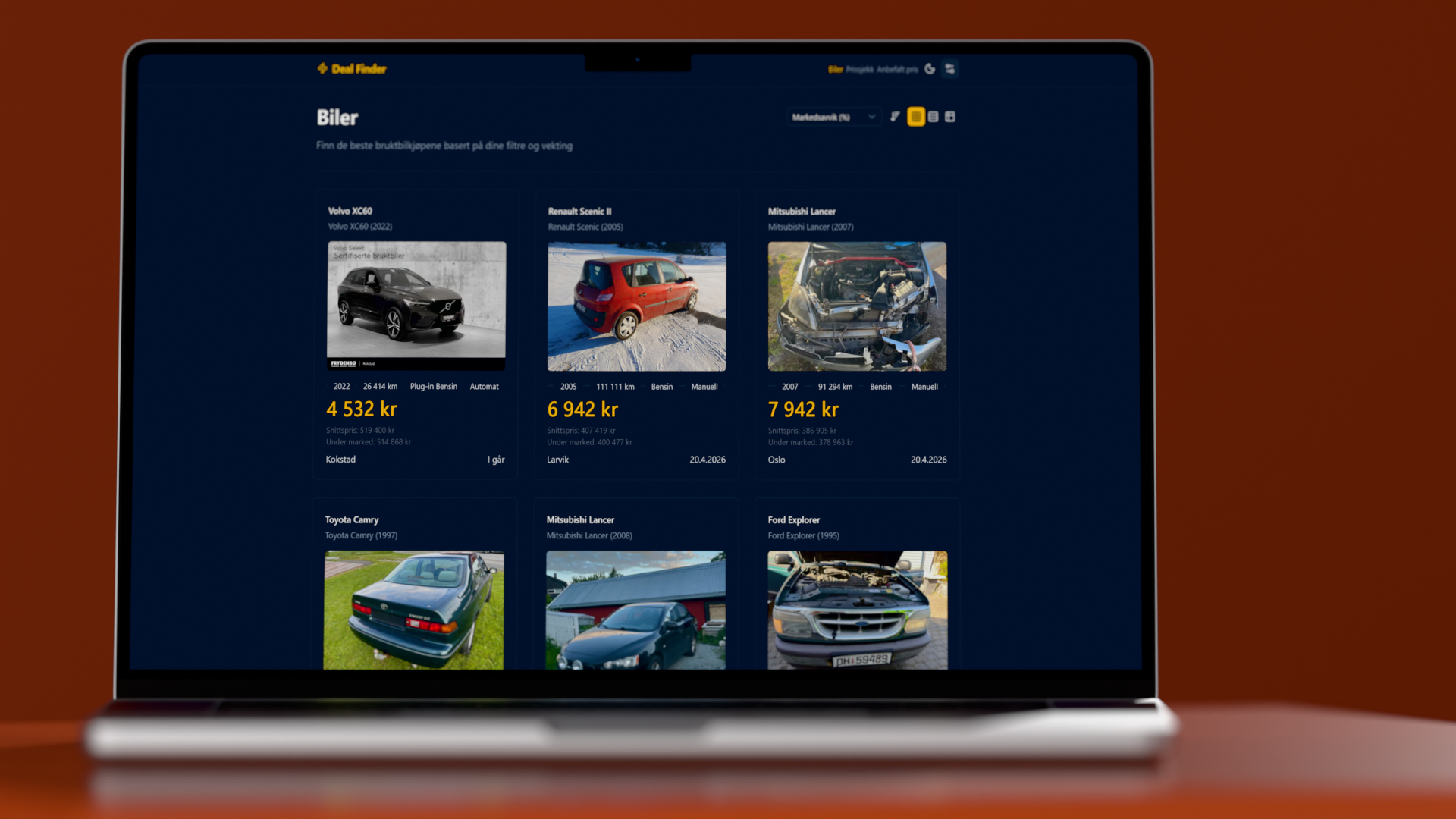
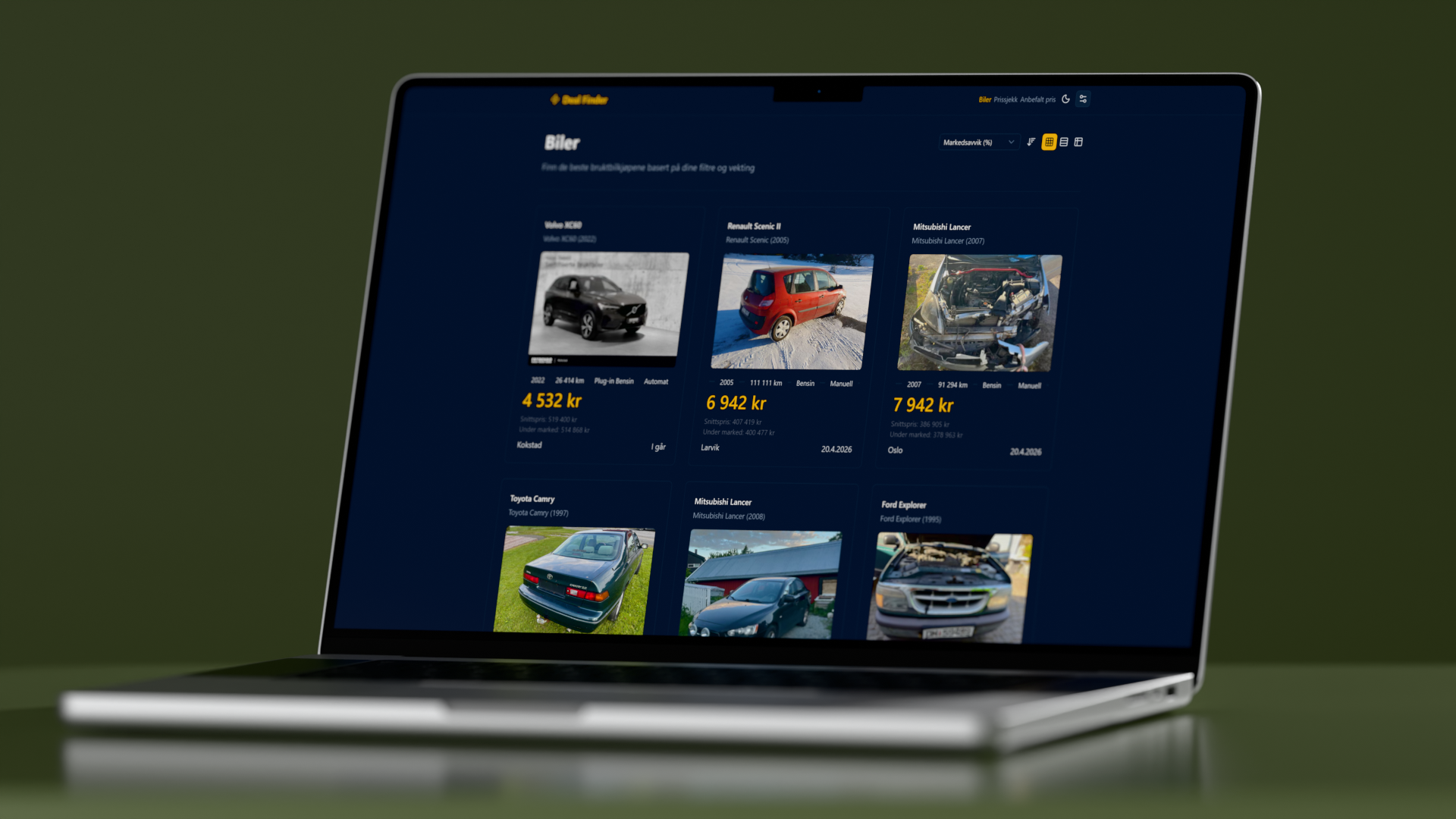
Around that sits a scraper that pulls listings, a FastAPI backend keeping them in Postgres, and a Nuxt frontend for looking through what it found. Later it grew a sell-side version too, working out what you should ask for a car rather than what you should pay.
My role
All of it. The scraper, the valuation logic, the API and the frontend. It was the part of the business I could actually do.
The result
The company never happened. We talked about it a lot, got as far as sketching out how it would work, and then everyone's normal life carried on. There's no company, no workshop and no flipped cars.
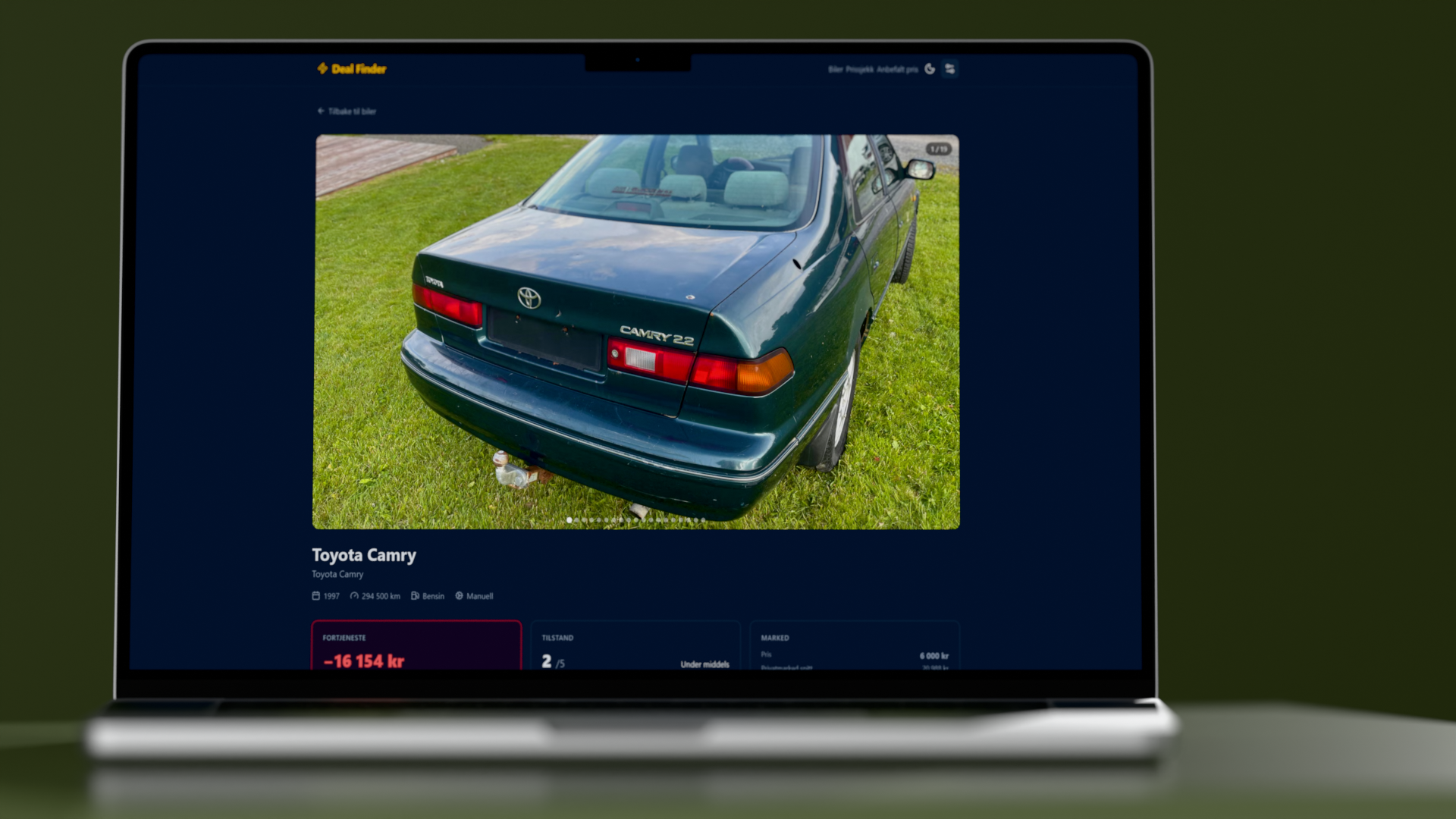
The tool works, though. Give it a listing and it will tell you what the car is probably worth and how confident it is about that, which is further than I expected to get. Mostly I came away thinking used car pricing is a lot more structured than it looks from outside, and that nearly all the difficulty is in deciding what counts as a comparable car.